
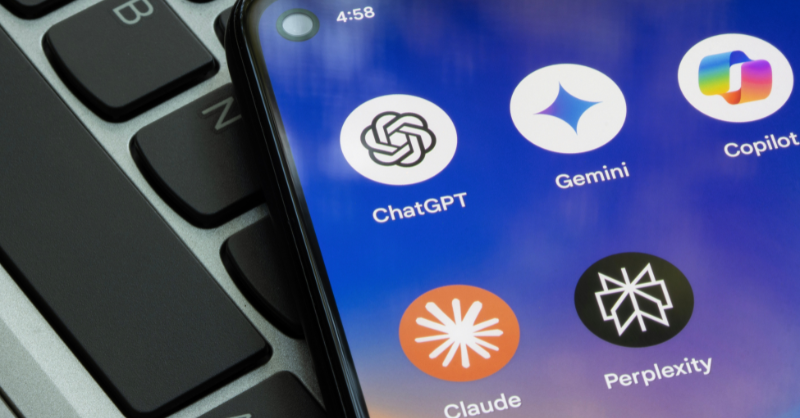
Generative AI has taken the workplace by storm. In fact, according to the Microsoft Work Trend Index (2025) about 69% of leaders and 45% of employees are now using AI regularly. As a result, many HR and IT leaders have recognized the need for oversight to ensure AI is used safely, ethically, and effectively. While data security and confidentiality agreements protect existing information such as client data, financial records, and trade secrets, they don’t specifically govern how your employees use AI agents to access, process, or generate new information. It’s time to consider drafting a formal AI policy.
What Is an AI Policy?
An AI policy is a formal framework that outlines how an organization governs the responsible and effective use of artificial intelligence technologies. It defines clear expectations for when, how, and by whom AI tools may be used, ensuring compliance, protecting sensitive information, and promoting ethical business practices. A comprehensive AI policy typically includes:
- Purpose and scope: The objectives of AI adoption and the areas where it applies.
- Approved tools and use cases: The systems employees are authorized to use and for what purposes.
- Data governance: Protocols for safeguarding proprietary, confidential, or personal data.
- Ethical standards: Guidelines to mitigate bias, misinformation, and misuse.
- Governance and training: Assigned oversight responsibilities and ongoing employee education.
Ultimately, an AI policy enables organizations to harness the advantages of AI innovation while minimizing operational, reputational, and regulatory risks.
The Hidden Risks of Unregulated AI Use
Artificial intelligence is designed to streamline operations and enhance productivity. However, when implemented without clear governance, it can introduce significant organizational risks. For instance:
Data privacy remains the first and foremost concern. Employees who input confidential information such as resumes, compensation data, or proprietary content into public AI platforms may inadvertently expose that data to external systems. What appears efficient may, in reality, constitute a compliance violation.
Bias and discrimination present another critical challenge. AI-driven screening tools can unintentionally perpetuate existing biases. If an algorithm favors specific demographics or keyword patterns, it can exclude qualified candidates and create exposure to discrimination claims, damaging both legal standing and employer reputation.
Copyright and intellectual property considerations also demand attention. AI-generated outputs may incorporate copyrighted or restricted material, exposing the organization to potential infringement disputes.
Finally, accountability and transparency must be prioritized. When AI influences hiring or operational decisions, leaders must ensure they can articulate the rationale behind outcomes. A lack of transparency may violate emerging regulatory standards and undermine organizational credibility.
Real-World Examples of AI Gone Wrong
These risks are not hypothetical. Multiple organizations have experienced tangible consequences resulting from unregulated AI usage. Consider the following examples:
- In 2023, Samsung prohibited the use of ChatGPT after employees unintentionally uploaded proprietary code and internal meeting notes, triggering a major data security concern.
- JPMorgan Chase and Verizon enforced strict data security measures following reports that employees “may have” shared proprietary client information through generative AI platforms.
- Similarly, Amazon and Apple restricted employee access to public AI tools to prevent potential data leakage and confidentiality breaches.
There is also plenty of evidence that small-to-medium (SMBs) are leaking data via AI usage at an equally alarming rate. In fact, leading data security firm, Cyberhaven (2023) reported that “Sensitive data makes up 11% of what employees paste into ChatGPT, but since usage of ChatGPT is so high and growing exponentially this turns out to be a lot of information.”
Even within talent acquisition, some companies have faced criticism over AI-driven resume-screening systems that unintentionally disadvantaged certain demographic groups. These cases further highlight that responsible governance and clear AI policies are essential to mitigating risk and maintaining trust throughout every area of the organization.
How an AI Policy Protects Your Organization
An AI policy establishes a structured framework for safe, strategic use of artificial intelligence across all of your teams. It is more than a document. It is an operational control and a catalyst for innovation. A strong policy should:
- Define permitted and prohibited uses. Specify where AI is appropriate and where it is not, including bans on entering confidential client or employee data into public tools.
- Assign accountability. State who is responsible for decisions, outcomes, and compliance oversight.
- Set data security controls. Provide guidance for using private or on-premises systems when handling sensitive information.
- Mandate transparency. Require disclosure when AI assists with content creation, hiring, or decision-making.
- Embed ethical standards. Address fairness, bias mitigation, and human oversight in every workflow.
Some leaders worry that AI policies stifle innovation. However, in practice, the opposite is true. A well-defined AI policy reduces uncertainty and enables confident, responsible use. When employees understand the rules, they experiment within safe boundaries. That structure promotes innovation while managing ethical and legal risk. When implemented strategically, the policy builds trust with employees, clients, customers, partners, shareholders, and other stakeholders. It signals that your organization governs AI responsibly, rather than merely using it.
Future-Proofing Your Business
AI regulation is evolving quickly. The European Union’s AI Act and emerging regulations in the U.S. will require you to demonstrate responsible AI governance. Companies without formal policies will face increased scrutiny and risk. Proactively adopting a generative AI policy not only mitigates risk, but it also positions your organization in ahead of compliance mandates. You’ll gain a first-mover advantage in AI readiness and your teams can innovate faster and adopt new tools with confidence.
At The Connors Group, we help employers navigate the future of work with strategic hiring, workforce planning, and AI-driven transformation. Whether you’re building your first AI governance framework or scaling responsible adoption, let our team introduce you to the right talent and expertise to help your organization lead the way. Simply reach out to discuss your hiring requirements.